













Earlier this week, The Transport Project (TTP) released a letter to the leaders of the House Ways and Means Committee and the Senate Finance Committee. Nearly 200 businesses and organizations signed the letter, urging Congress to quickly extend the Alternative Fuel Tax Credit (AFTC) and to pass the Renewable Natural Gas Incentive Act.
Additional letter signers include the American Biogas Council, American Public Gas Association, American Public Transportation Association, American Trucking Associations, Coalition for Renewable Natural Gas, and the National Waste & Recycling Association.
The AFTC expired on December 31, 2024. The credit, worth 50 cents per gallon for Compressed Natural Gas (CNG) and Liquefied Natural Gas (LNG) motor fuel, has been in place since 2005 and has a strong track record, helping public and private fleets invest as they shift to cleaner, U.S.-produced gaseous fuels.
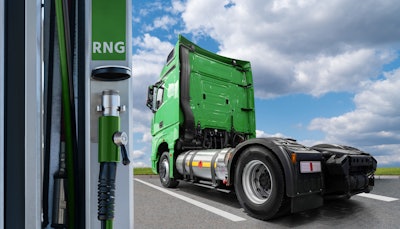
The Renewable Natural Gas (RNG) Incentive Tax Credit—proposed in the Renewable Natural Gas Incentive Act by Senators Thom Tillis and Mark Warner and Representatives Brian Fitzpatrick and Linda Sanchez—would give motor vehicles that run on RNG a $1.00-per-gallon tax credit. The goal is to encourage wider use of cleaner, more efficient transportation fuels nationwide.
[Related: Renewable natural gas best diesel replacement, experts say]
Without these end-user tax credits, fleets face uncertainty, and the rollout of new clean natural gas vehicles has slowed. These credits work hand-in-hand with the Section 45Z Clean Fuel Production Tax Credit, which was preserved and extended in the One Big Beautiful Bill Act.
More precisely, section 45Z rewards fuel producers for lowering carbon intensity, while end-user credits help fleets and fuel buyers manage the higher upfront costs of alternative-fuel vehicles and infrastructure. Without an end-user credit to match 45Z, fleets cannot benefit directly from the producer incentive, limiting its overall impact.
Signers of the letter argue that extending end-user credits would boost demand for medium- and heavy-duty clean vehicles, support ongoing clean transportation efforts, and preserve recent economic and environmental gains.
The credits would directly help transit agencies, school districts, freight haulers, and delivery companies adopt RNG-fueled vehicles without raising costs, while the RNG Incentive Act encourages farmers and ranchers to capture methane from animal waste, cutting harmful emissions. RNG, produced from sources like agricultural, wastewater, landfill, or food waste, can help achieve carbon-negative results when used in trucks, buses, and refuse or recycling vehicles.
RNG's appeal for commercial trucking is expected to grow with the introduction of the Cummins X15 natural gas engine, which promises diesel-like power and performance.
[Related: Clean Energy activates RNG pipeline flow at South Fork Dairy]